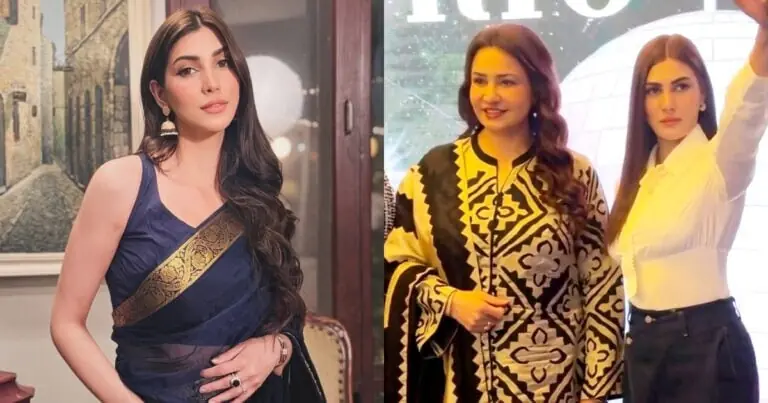
The Unfiltered Lens: Nazish Jahangir's Outfit & Attitude Spark Social Media Storm

Nazish Jahangir, a prominent figure in the entertainment industry, has recently found herself at the center of a heated online debate, drawing significant public attention for her choice of attire and perceived demeanor. The incident underscores the relentless scrutiny public figures, particularly women, face in the digital age, where every appearance and expression is dissected under an unforgiving spotlight.
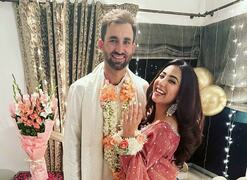
The controversy erupted following a recent public appearance where Jahangir’s outfit choice became an immediate talking point across various social media platforms. What began as commentary on fashion quickly escalated into a broader discussion, with many users also criticizing her attitude, as interpreted from photographs and short clips circulating online. This swift transition from fashion critique to character assessment is a familiar pattern in the realm of celebrity culture, highlighting the often-unspoken expectations placed upon those in the public eye.
In an era dominated by instant reactions and viral content, celebrities are constantly navigating a minefield of public opinion. An outfit, intended perhaps as a personal style statement or simply a choice for an event, can rapidly become a lightning rod for criticism, judgment, and even moral policing. For Nazish Jahangir, this recent episode serves as a stark reminder of how quickly online discourse can turn from admiration to condemnation, often without a full understanding of the context or intent.
The phenomenon of “trolling” — the act of deliberately provoking others online — has become an unfortunate byproduct of social media’s pervasive reach. While platforms offer unprecedented access and connection between celebrities and their fans, they also provide an anonymous arena for negativity. Comments range from constructive criticism to outright personal attacks, often targeting appearance, personal choices, and perceived flaws. This environment can be particularly challenging for artists who are expected to maintain a certain public image while also expressing their individuality.
This incident involving Nazish Jahangir is not an isolated one; it reflects a broader societal trend where public figures are held to often unrealistic standards. The pressure to conform to certain aesthetic and behavioral norms is immense, and any deviation can trigger a wave of online backlash. It prompts a crucial conversation about the boundaries of public commentary and the responsibility of online users. As the digital landscape continues to evolve, so too must our understanding of empathy and respect in online interactions, especially when discussing the choices of individuals in the public sphere.

 0 Comments
 Print
Print





What do you think