The Final Resting Place: Why Attaullah Khan Esakhelvi's Burial Plans Are Igniting a National Conversation

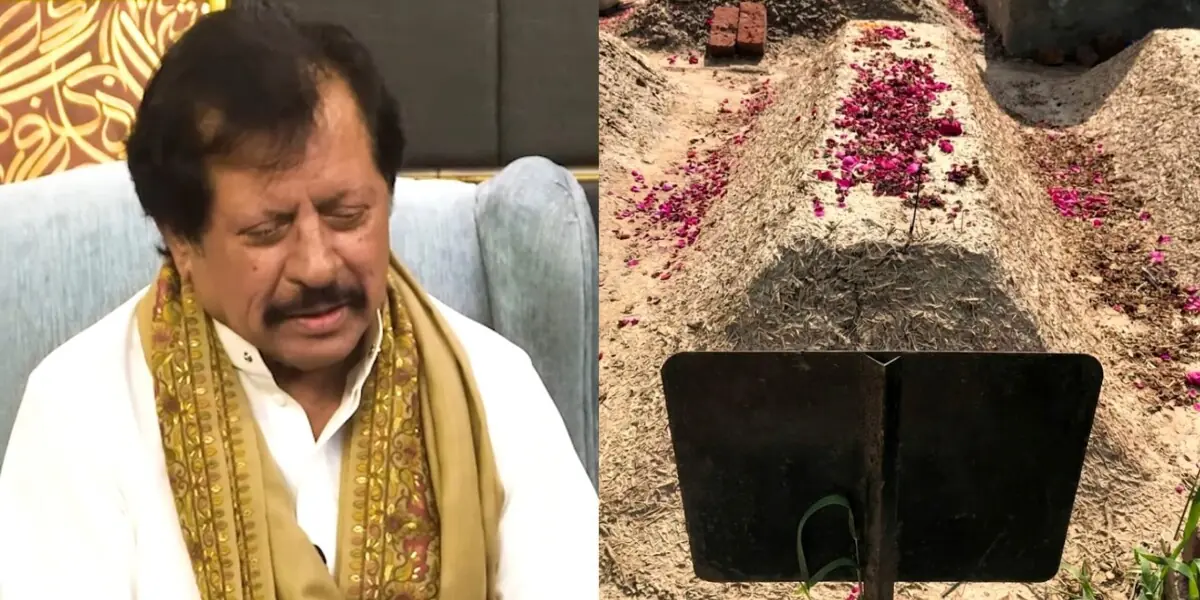
The news of legendary folk singer Attaullah Khan Esakhelvi’s burial plans has sent ripples across the nation, sparking a fervent debate among his millions of admirers, cultural custodians, and even political figures. As one of Pakistan’s most iconic voices, whose melancholic melodies have resonated with generations, the discussion surrounding his final resting place is far more than a private family matter; it has become a poignant reflection of his immense cultural stature and the deep affection he commands.
Esakhelvi, often hailed as the ‘Nightingale of the Seraiki belt’ and a ‘living legend,’ has transcended regional boundaries to become a national treasure. His unique vocal style, deeply rooted in the folk traditions of Punjab, particularly the Seraiki language, has given voice to the joys and sorrows of the common person. It is this profound connection with the masses that fuels the current discourse.
At the heart of the debate lies the question of where such a towering figure should be laid to rest. While family wishes traditionally dictate such decisions, the public sentiment often leans towards a more symbolic location. Some argue passionately for his burial in his ancestral hometown of Esakhel, Mianwali, emphasizing the importance of returning him to the soil that nurtured his artistry. This perspective champions the preservation of local heritage and the desire for his grave to become a pilgrimage site for fans in his native region.
Conversely, a significant segment of the public and cultural commentators advocate for a more prominent, perhaps national, burial site. They contend that a figure of Esakhelvi’s magnitude, whose contributions have enriched the entire nation’s cultural fabric, deserves a resting place that reflects his national and international impact. Suggestions range from a dedicated space in a major city’s graveyard, accessible to a wider audience, to even a national monument, acknowledging his status as a cultural icon.
The discussion also touches upon the nature of the memorial itself. Should it be a simple, humble grave, in keeping with the folk artist’s often unpretentious persona, or a grander mausoleum befitting a legend? These deliberations underscore the deep emotional investment the public has in Esakhelvi’s legacy, viewing his final journey as a collective moment of remembrance and honor.
As the debate continues to unfold, it highlights the complex interplay between personal wishes, family traditions, and the overwhelming public desire to pay a fitting tribute to an artist who has given so much. Regardless of the eventual decision, the passionate discourse itself serves as a testament to Attaullah Khan Esakhelvi’s enduring power, proving that even in discussions of his final repose, his voice continues to stir the soul of the nation.

 0 Comments
 Print
Print








What do you think